
Can I Record My Doctor Appointment? A Complete State-by-State Guide

At a Glance:
Many patients struggle to remember medical details, but recording appointments can help. This article explains when recording is legal, how consent laws work in each state, and how to record doctor visits in a way that builds trust and protects everyone involved.
We’ve all been there: sitting in the exam room, trying to keep up as a doctor explains a diagnosis, treatment plan, and medication list that feels impossible to remember.
Your instinct is to hit record, but you find yourself asking the question: “can I record my doctor appointment?”
Good news: recording your doctor is legal in most of the country, but knowing the rules matters.
This guide walks you through the laws, how to ask for permission, and why more doctors are encouraging patients to record their visits.
The Federal Law Baseline

Is it legal to record doctor visits?
Yes, recording doctor visits is legal in most situations, as long as you follow your state’s consent laws. There is no special federal law that singles out medical appointments, instead, general recording and wiretapping laws apply.
Under federal law (18 U.S.C. § 2511), only one party in a conversation needs to consent to a recording. If you are part of the conversation, your consent alone is enough.
But states can create stricter rules.
What matters for medical appointments:
In a one party consent medical recording states, you may legally record your doctor without asking.
In a two-party (all-party) consent state, you must tell your doctor and obtain agreement before recording.
HIPAA does not prevent you from recording your own appointment.
Medical visits are considered private settings, so state consent rules apply.
A common misconception:
Some patients fear that recording a doctor is “illegal under HIPAA.” This is false.
HIPAA regulates what health providers do with your information, not what you do with your own health information.
The only caution: Recording other patients or staff conversations not about your care may violate privacy laws.
“Doctors have a big responsibility to bring smiles on the faces of suffering humanity”
State-by-State Breakdown

Here’s the complete list based on the 50-state chart from Matthiesen, Wickert & Lehrer, S.C. (2022):
|
ONE-PARTY CONSENT STATES
(38 states + D.C.) In these states, you may legally record your doctor appointment without asking, as long as you are part of the conversation. |
TWO-PARTY (ALL-PARTY) CONSENT STATES
(12 states) These states require everyone involved to give permission: |
|
*Nevada is technically "mixed," but in practice is treated as requiring all-party consent for most in-person conversations. |
Special cases
Vermont
There is no clear statute governing recording individuals. Courts allow recordings in public spaces but restrict hidden surveillance in private settings.
Best practice: Ask for permission.
Montana
Classified as all-party consent, though limited exceptions exist.
When in doubt: Ask.
How to Ask Your Doctor for Permission
The script that gets a "yes" almost every time

Many patients search for guidance on how to ask doctor to record appointment, and the evidence shows that asking openly is almost always the best approach.
In a study of 360 oncologists published in Cancer, 93% reported that patients have asked to record their visits, and 75% were comfortable with being recorded when the request was made directly.
Experts interviewed by CURE® emphasized that asking permission matters, not only because some states legally require it, but because physicians often feel uneasy about how recordings might be used or shared, especially online.
So what should you actually say?
Option 1 - Simple and Direct:
"I'd like to record our conversation today so I can remember everything you tell me. Is that okay with you?"
Option 2 - Explain the Why:
"I want to make sure I understand your guidance and can share accurate information with my family. Would it be okay if I recorded our appointment?"
Option 3 - For Complex Situations:
"I know we're going to discuss a lot today, and I want to make sure I don't miss anything important. I'd like to record so I can review it later and follow your instructions correctly. Is that all right?"
When to Ask:
At the beginning of the appointment, before discussion starts
Before any sensitive or technical information is shared
Casually, not apologetically
What If Your Doctor Says No?

If your doctor says no, the first thing to understand is that, even when recording is legal under recording medical appointments state laws, many physicians still feel uneasy about being recorded. The CURE® study helps explain why.
Among 360 oncologists surveyed, 25% reported discomfort with patients recording visits, and they cited several reasons for declining. Nearly half of clinicians who felt uneasy said they worried the conversation would become “less natural,” while 44% believed the presence of a recording could disrupt the flow of the appointment.
Others expressed concern that sensitive discussions, such as explaining a prognosis or reviewing treatment risks, might be misunderstood when replayed later without the nuance of the real-time conversation.
Physicians also reported anxiety about how recordings might be used outside the exam room. Some feared that a clip could be posted on social media, taken out of context, or interpreted as an effort to increase physician accountability.
How to address concerns
If your doctor seems hesitant, a calm and respectful response can go a long way toward easing their worries. Try saying something like:
“I understand your hesitation. I want to assure you this is just for my personal use to remember what you tell me. I won’t share it publicly—it’s the same as taking notes, just more accurate. Many doctors find it actually reduces misunderstandings.”
This type of reassurance directly addresses the most common fears physicians report, misinterpretation, loss of context, and concern over information being shared outside the exam room.
By clarifying your intentions, you reinforce trust and show that the recording is meant to support your care, not scrutinize your clinician.
But what if your doctor still says no?
Your options if they still decline
Even without a recording, you still have several effective ways to capture important information from your visit:
Ask for a written summary
Request that your doctor document the key points, recommendations, medication instructions, and next steps. Many providers already generate an after-visit summary, and you’re entitled to clear documentation of your care.
Bring someone with you
A family member, partner, or friend can help take notes, ask clarifying questions, and ensure nothing gets missed, especially during complex appointments.
Take detailed notes
Let your doctor know you’ll be writing things down and may need them to slow down or repeat information. Most clinicians appreciate this effort and are willing to speak more deliberately.
Consider finding a new provider
If a doctor consistently refuses recording without offering a reasonable explanation, and provides no alternative for helping you remember important details, it may be a sign they are not aligned with patient-centered care. A provider who values transparency should support your efforts to understand and participate in your own treatment.
Why Doctors SHOULD Want You to Record

Doctors should want you to record your appointment because it improves care, reduces misunderstandings, and makes their work easier, and this is just as true for clinicians as it is for patients asking can I record my doctor appointment during a visit.
While recording is often viewed as a patient-centered convenience, the reality is that it also provides substantial benefits to healthcare providers. Recording isn’t about catching mistakes or creating mistrust; it’s about building a clearer, more accurate, and more efficient healthcare experience for everyone involved.
That shift in perspective is important.
Because when you look closely at what happens inside a typical medical visit, a pattern emerges: both sides are trying to communicate as clearly as possible under very real constraints.
Doctors have limited time.
Patients have limited memory.
The stakes are high for everyone.
Recordings turn confusion into clarity
Studies show that patients remember only 40–80% of what their doctor tells them, and much of that is recalled incorrectly. Under stress, or when receiving difficult news, memory drops even more. Doctors know this. They see it when patients return with preventable complications, misinterpreted instructions, or incomplete follow-through.
A recording flips that script.
Patients can replay complex explanations, double-check medication instructions, and revisit the details of a diagnosis on their own time. And when patients understand, they comply. That means:
✔️ Fewer misunderstandings
✔️ Fewer skipped steps
✔️ More accurate medication use
✔️ More timely follow-up appointments
✔️ And ultimately, better health outcomes
It’s no surprise that research shows patients with access to recordings exhibit higher treatment adherence and less anxiety about next steps.
Recordings Protect Doctors, Too
A surprising but important benefit: recordings can reduce malpractice risk. Under recording medical appointments state laws, a legally obtained recording provides clarity rather than controversy, and many medicolegal conflicts arise from fuzzy memories, not clinical negligence.
A recording preserves:
✔️ The doctor’s exact wording
✔️ The patient’s questions
✔️ The context of the conversation
✔️ Confirmation that risks, benefits, and instructions were discussed
Instead of relying on memory, or competing recollections, there is a clear, fair record. Doctors gain confidence knowing their explanation stands on its own.
“A good doctor’s comforting and reassuring words are sometimes more powerful than the medicines.”
– Meduhub
Best Practices for Recording Appointments

Recording a medical visit can be incredibly helpful, but like any communication tool, it works best when it’s done thoughtfully.
The goal is to support your understanding of your care, not to disrupt the conversation or create tension. These best practices ensure that your recording strengthens the doctor–patient relationship, protects privacy, and leads to better outcomes.
Before the appointment
Charge your phone or recording device
A dead battery helps no one. Make sure your device is ready for the full visit.
Test the recording quality
Do a quick practice run to check clarity and volume. You want a recording you can actually understand later.
Clear storage space
Nothing derails an appointment like a “Storage Full” notification mid-recording.
Have a backup plan
Bring a notebook or a second device. If your primary recorder fails, you still walk away with reliable notes.
Risk-management experts at The Doctors Company emphasize that misunderstandings during appointments often arise from poor recall, not poor care. Being well-prepared reduces distractions for both you and your clinician and keeps the visit focused on your health.
During the appointment
Respect and transparency matter. These habits ensure the recording enhances, not interrupts, the conversation, and they align with best practices for how to ask doctor to record appointment in a way that feels collaborative rather than confrontational.
Place your phone visibly on the table
This maintains trust and avoids any perception of “secret recording,” which can damage the relationship and may even raise legal issues depending on state laws.
Stay engaged
Recording shouldn’t replace interaction. Ask questions, take quick notes, and stay present.
Ask your doctor to slow down or repeat information
Try: “Can you repeat that? I want to make sure I get this right.”
Doctors expect, and appreciate, clarifying questions.
Risk-management attorneys note that visible, intentional recordings are far less likely to cause misunderstandings or create discomfort among providers. Hiding your device can have the opposite effect, so openness is always best.
After the appointment
A recording is only as useful as what you do with it afterward.
✔ Label the file immediately
✔ Listen within 24 hours
✔ Write a summary of key points
✔ Store recordings securely
✔ Delete when no longer needed
What to record vs What NOT to do
| What to Record | What NOT to Do |
|---|---|
| Diagnosis explanations | Share recordings on social media |
| Treatment options and their pros/cons | Use recordings to threaten, intimidate, or "catch" your doctor |
| Medication instructions and dosing details | Record secretly or hide your device |
| Follow-up plans, timelines, and next steps | Capture other patients or private staff conversations |
| Questions you ask, and the doctor's answers | Record in restricted areas like waiting rooms or hallways |
| Clarifications your doctor provides during the visit | Keep recordings longer than needed if they contain sensitive information |
| Lifestyle recommendations or warnings | Edit or manipulate recordings in a misleading way |
Tools That Make Recording Easy and Secure
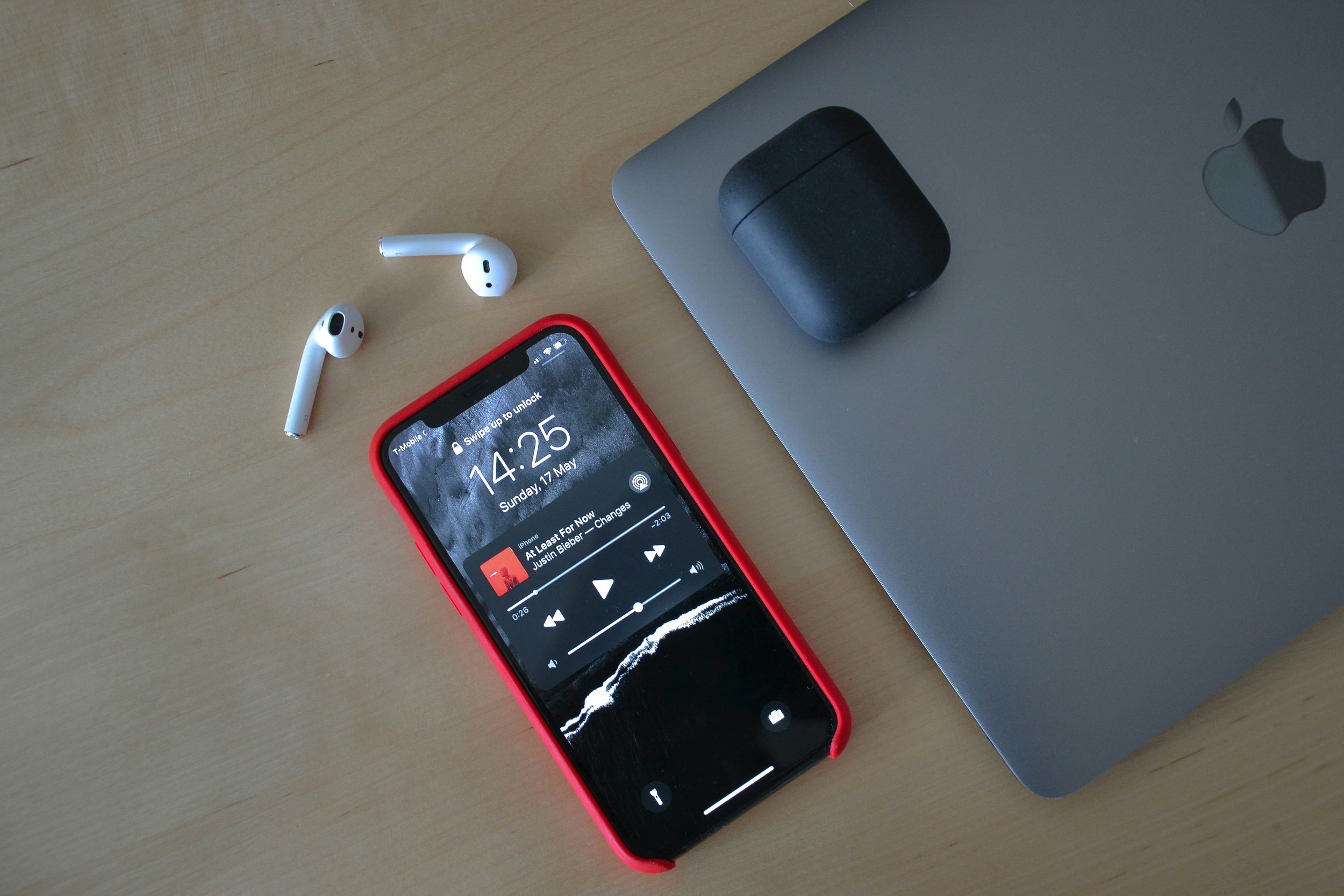
Once you understand your rights and how to record respectfully, especially after asking “can I record my doctor appointment” during a visit, the next step is choosing the right tool.
The best technology for recording medical appointments is simple, reliable, and secure, so you can focus on your doctor, not your device.
Simple options that work for most people
Phone Voice Memo App: Every smartphone has a built-in voice recorder.
Dedicated Voice Recorder: These small handheld devices are helpful for older adults who prefer physical buttons over apps.
The Better Solution for Healthcare Visits
While any recording tool works, Neatly was created specifically for medical appointments. It goes far beyond a basic audio file:
✔️ It records clearly, even in small exam rooms.
✔️ It automatically generates easy-to-understand summaries, perfect for reviewing your doctor’s instructions.
✔️ It organizes recordings by date, doctor, and condition, so nothing gets lost.
✔️ It allows secure sharing with family members or caregivers who help manage your care.
For patients who want accuracy and simplicity, it’s the most complete solution available.
Features that matter when choosing a tool
High-quality audio
Easy labeling and organization
Secure, ideally HIPAA-compliant, storage
Transcription or summary capabilities
Shareability with loved ones
Ready to capture all the details from your doctor appointments?
Neatly makes recording legal, easy, and automatic. Just press record and we handle the rest, creating plain-language summaries, organizing your health information, and keeping everything secure.
Hear what Neatly users have to say >
Frequently asked questions:
Q: Is it legal to record my doctor appointment without telling them?
A: In 38 states (one-party consent states), yes, it's legal to record without informing your doctor as long as you're part of the conversation. However, in 12 two-party consent states, you must inform your doctor and get their consent. Even in one-party consent states, it's courteous and builds trust to tell your doctor you're recording.
Q: Can my doctor refuse to let me record?
A: Yes, doctors can decline to be recorded, though most will agree when you explain it helps you remember their guidance. If your doctor refuses in a two-party consent state, you cannot legally record. In one-party consent states, you can legally record even if they object, but it's better to find a doctor who supports your desire to be an informed patient.
Q: Does HIPAA prevent me from recording my doctor?
A: No. HIPAA regulates what healthcare providers can do with your information, not what you can do with your own health information. As a patient, you have the right to your medical information, and recordings are part of that.
Q: What should I say when asking my doctor if I can record?
A: Keep it simple: "I'd like to record our conversation today so I can remember everything you tell me. Is that okay with you?" Most doctors will say yes when you frame it as wanting to be a better patient.
