
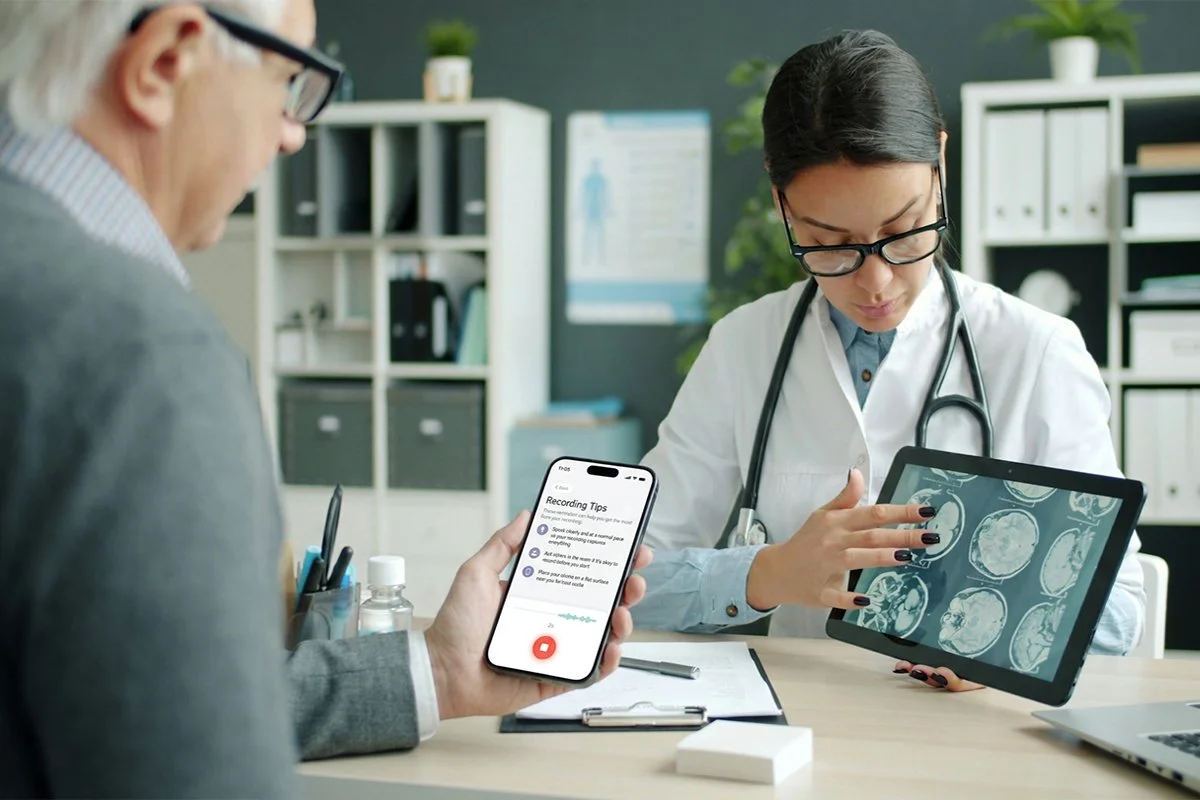
There's a good chance your doctor is already recording your appointment. AI scribes now listen in on a growing number of visits, drafting notes for the health record while you talk. What you usually don't get is a copy. [Read why that matters ]
You don't have to wait for anyone to hand you one. In most states, you can record the appointment yourself, quietly, without asking. Here's how.
First: is it legal?
In most of the US, yes. Most states follow what's called one-party consent. If you're part of the conversation, your consent is enough. You don't need to ask your doctor, and you don't need to tell them.
A smaller group of states, including California, Florida, Illinois, Pennsylvania and Washington, require everyone in the conversation to agree. If you live in one of them, jump to "If you're in an all-party state" below.
Not sure which rule applies where you live? [Check your state →]
One detail matters here: one-party consent covers conversations you're part of. That's why we suggest starting when your name is called, not while you're sitting in the waiting room, where you'd also pick up other patients' conversations.
How to record, step by step
Get set before you leave home. Charge your phone, open Neatly, and turn on Do Not Disturb so a call or notification doesn't interrupt the recording.
Start when your name is called. Tap record as you stand up. You won't be fumbling with your phone when the doctor walks in, and you won't miss the first few minutes while you're getting settled.
Put your phone down with your things. Face down on your bag, the chair next to you, or the counter works fine. Keep it out in the open rather than zipped inside a bag or pocket, so the audio stays clear.
Forget about it. Waiting ten minutes for the doctor, stepping out to change, a nurse popping in: leave it running. Neatly trims the silence and dead air, so you don't need to start and stop at exactly the right moment.
Stop when the appointment wraps up. On your way out of the exam room is fine.
Later, when you're trying to remember exactly what your doctor said about that new dose or the next test, you can ask Neatly and get the answer from your own visit.
This works the same way with any practitioner you see: your physical therapist, acupuncturist, dermatologist or specialist.
If you're in an all-party state
You'll need to ask, but it's usually a ten-second conversation. Try something like:
"I record my appointments so I can remember everything later. Is that okay with you?"
Ask as soon as the doctor walks in, before the conversation gets going. Recording is already common in some specialties, such as oncology, where a lot of complex information comes at you quickly. Many doctors won't think twice about it.
If someone asks you to stop
Some practices have their own no-recording policies. In one-party states, these are usually office rules rather than laws, but a practice can still ask you to stop, or decide not to keep seeing you. If it comes up:
Stay calm and explain why. You're recording so you can remember instructions, not to catch anyone out.
Ask about their recording. If they're using an AI scribe, ask whether you can have a copy or a detailed visit summary.
Decide what matters most to you. You can stop and take notes by hand, or look for a provider who's comfortable with patients keeping their own record.
Your visit, your record
The conversation is about your body, your care, and the instructions you're expected to follow afterward. Keeping your own record of it isn't sneaky. It's how you make sure nothing gets lost between the exam room and home.
This post is general information, not legal advice. Recording laws vary by state and can change, so check the rules where you live before you record. [Check your state →]
